Category: Clinical Studies

  • Stapler Circumcision in Practice: First European Experience (Patients Aged 14–80 Years)

    Stapler Circumcision in Practice: First European Experience (Patients Aged 14–80 Years)

    What does stapler circumcision look like in clinical practice? Data have come almost exclusively from Asia—which is why the report by Italian andrologists from Rome and Frascati, published in Archivio Italiano di Urologia e Andrologia, is significant as one of the first European experiences with this method.

    Methodology: 20 Patients, Wide Age Range

    The authors used a disposable stapler in 20 patients aged 14–80 years with congenital phimosis, excess foreskin, or following balanitis and posthitis. Procedures were performed under local anaesthesia (with sedation in the 3 youngest patients) in an outpatient setting. The device simultaneously cuts and sutures the wound using 12 staples.

    This is a preliminary case series (without a control group)—it does not provide statistical comparison, but demonstrates real-world European application of the method in everyday practice.

    Results: 5–7 Minutes, No Serious Complications

    ParameterResult
    Procedure time5–7 min
    Serious complicationsnone
    Significant bleedingnone
    Spontaneous staple detachment15–25 days
    Patient satisfaction100% (operative, postoperative, aesthetic, functional)

    In two cases, single absorbable sutures were applied prophylactically, and in two patients residual staples were removed after 30 days—a simple, painless outpatient procedure.

    Why This Report Matters

    • European confirmation of Asian data—the method proves effective in Western andrological practice as well.
    • Wide age range—from adolescent to 80-year-old, demonstrating the universality of the method.
    • Outpatient procedure under local anaesthesia—fast, simple, without an operating theatre.

    Limitations – Honestly

    This is a preliminary, uncontrolled report on a small group (20 patients). It does not replace randomised trials, but provides valuable supplementation—the first European “voice” confirming earlier results.

    Anastomat ZSR 2.0 in This Context

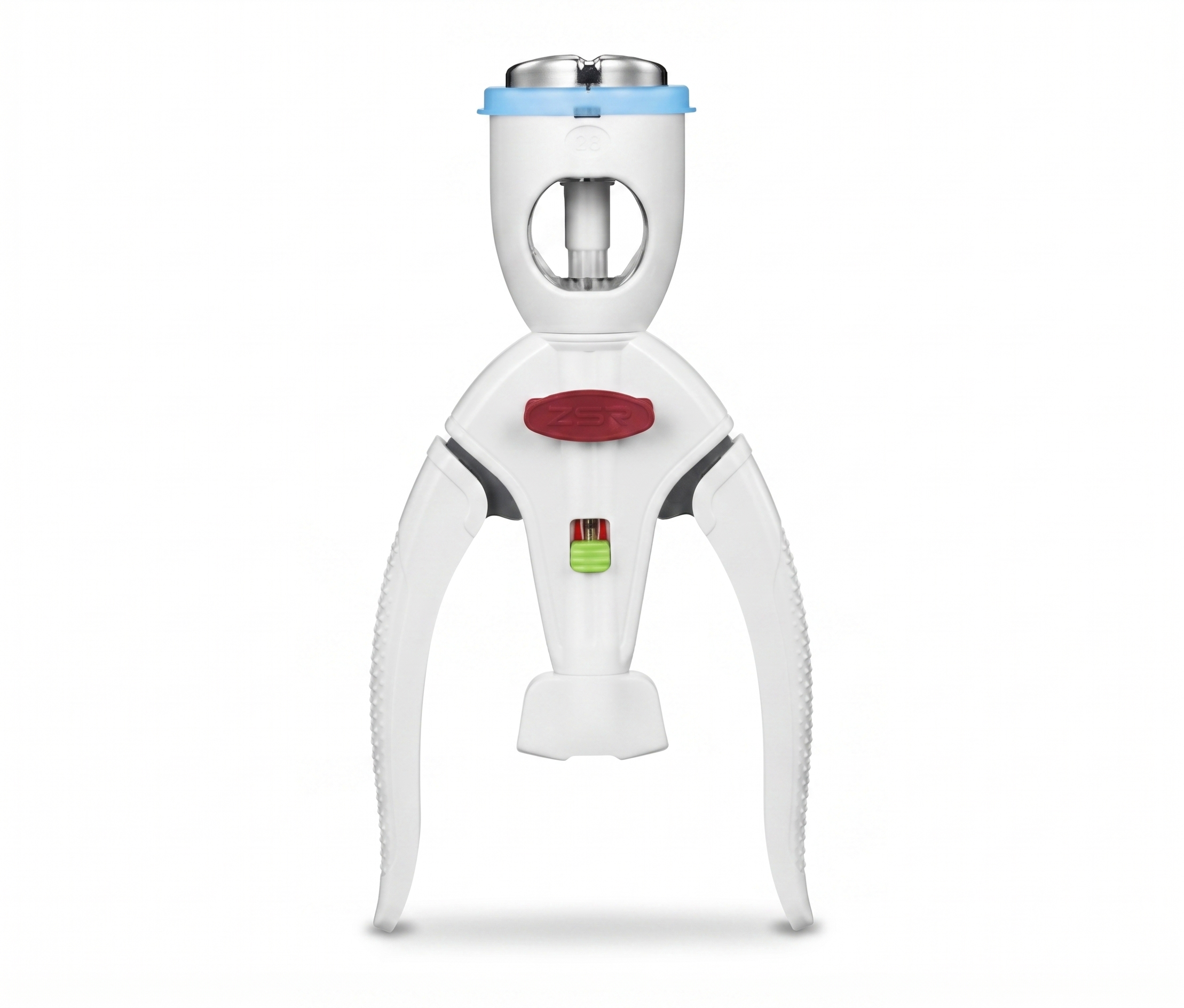
    Anastomat ZSR 2.0 belongs to the same class of disposable staplers described by the Italian authors—with simultaneous cutting and suturing and self-detaching staples. The report confirms its simplicity, speed, and good aesthetic outcome in European practice.

    View Anastomat ZSR 2.0 specifications → | Schedule a consultation →

    Conclusions

    The first European experience with a disposable stapler for circumcision confirms that it is a fast (5–7 min), simple, and safe outpatient procedure with good aesthetic outcome and complete patient satisfaction—across a wide age range.

    Source: Pozza D, Pozza C, Mosca A, Pozza M. Preputial circumcision performed with a new mechanical stapling tool. The “Langhe disposable circumcision suture device”. Preliminary experiences. Arch Ital Urol Androl. 2019;91(4):261–262.

    Content intended for medical professionals; does not replace individual clinical assessment.

    Sources

    1. Pozza D, Pozza C, Mosca A, Pozza M. Preputial circumcision performed with a new mechanical stapling tool. The “Langhe disposable circumcision suture device”. Preliminary experiences. Arch Ital Urol Androl. 2019;91(4):261–262. doi:10.4081/aiua.2019.4.261. PMID: 31937092. View in PubMed
  • Stapler or Shang Ring? Meta-analysis of 3,345 Patients Settles the Debate

    Stapler or Shang ring—which circumcision device is more effective and safer? Among modern, minimally invasive methods, these two lead the field. The answer is provided by a meta-analysis—the highest level of scientific evidence—covering 12 studies and 3,345 patients, published in Revista Internacional de Andrología.

    Methodology: 12 Studies, 3,345 Patients, Systematic Review

    The authors searched PubMed, Embase, CNKI, and other databases, including randomized and prospective studies comparing the stapler with the Shang ring in the treatment of phimosis and redundant prepuce. Twelve studies were included (8 RCTs + 4 prospective): 1,661 patients in the stapler group and 1,684 in the Shang ring group. Risk of bias was assessed using the Cochrane tool.

    Meta-analysis combines the results of multiple studies into a single pooled evidence base—which is why it stands at the top of the “evidence pyramid” and represents the strongest clinical argument.

    Results: Stapler Wins in Nearly Everything

    ParameterStapler (DCSD) vs Shang RingSignificance
    Healing time~9 days shorterp0.001
    Postoperative pain (24 h)significantly lowerp0.001
    Satisfaction with appearance93% vs 83%p=0.001
    Wound infection~84% lower risk (RR 0.16)p0.001
    Wound edema~76% lower risk (RR 0.24)p0.001
    Wound dehiscence~64% lower risk (RR 0.36)p0.001
    Adverse events~58% lower risk (RR 0.42)p0.001
    Procedure timeshorterp=0.02
    Intraoperative bleedingslightly higherp=0.02
    Costhigherp0.001

    Key Advantages: Healing and No Pain During Removal

    • ~9 days shorter healing—because the stapler cuts and sutures the wound simultaneously, while the Shang ring remains on the penis and requires removal after ~7 days.
    • No pain during suture removal—removing the Shang ring can be painful (sometimes requiring anesthesia), which the stapler does not involve.

    Significantly Fewer Complications

    The meta-analysis demonstrated significantly lower risk in the stapler group for wound infection, edema, wound dehiscence, and overall adverse event rate. The authors attribute this in part to the fact that the Shang ring, worn for 2–3 weeks, impairs lymphatic vessel regeneration and promotes edema and infection.

    Where the Shang Ring Is Better—Honestly

    • Intraoperative bleeding—slightly higher with the stapler (the ring physically compresses vessels before cutting). However, the difference was minimal.
    • Cost—higher than the ring.

    Limitations of the Meta-analysis

    All included studies originated from China, some did not employ blinding, and there was significant heterogeneity among the studies. The authors emphasize the need for further high-quality, multicenter RCTs—however, sensitivity analysis confirmed the stability of the conclusions.

    Anastomat ZSR 2.0 in Light of the Highest Evidence

    Anastomat ZSR 2.0 belongs to the class of disposable staplers (DCSD), which in this meta-analysis proved more effective and safer than the Shang ring—with shorter healing, lower pain, better cosmetic outcome, and fewer complications.

    View Anastomat ZSR 2.0 specifications → | Schedule a consultation →

    Conclusions

    The meta-analysis of 3,345 patients clearly indicates that the disposable stapler is a more effective and safer circumcision method than the Shang ring—primarily due to shorter healing, lower postoperative pain, better cosmetic outcome, and fewer complications.

    Source: Huang C, Song P, Zhou S, et al. Disposable circumcision suture devices versus Shang ring circumcision for management of redundant prepuce or phimosis: A systematic review and meta-analysis. Rev Int Androl. 2017;15(3):108–118.

    Content intended for medical professionals; does not replace individual clinical assessment.

    Sources

    1. Huang C, Song P, Zhou S, Dai Y, Xu C, Gao Y, Zhao X. Disposable circumcision suture devices versus Shang ring circumcision for management of redundant prepuce or phimosis: a systematic review and meta-analysis. Rev Int Androl. 2017;15(3):108–118. doi:10.1016/j.androl.2017.03.003. View publication
  • Recovery after stapler circumcision: return to activity in 3 days — a study from Peking University

    What does the return to normal life look like after disposable stapler circumcision? A study conducted at Peking University First Hospital and published in the prestigious Journal of Urology tracked the procedure and recovery of 62 adult men.

    Methodology: 62 patients, observation up to 12 weeks

    The study included 62 adult men (average age 28 years) who underwent surgery for medical indications: redundant prepuce (61%), recurrent balanoposthitis (16%), phimosis (23%). A circular stapler with a stapled anastomosis (18 staples) was used under local anesthesia. Patients were observed on day 3 and at weeks 1, 2, 4, and 12.

    This is a single-arm study (without a comparison group) — it evaluates the performance of the device itself, not the difference compared to the classical method.

    Results: fast procedure and rapid return to activity

    ParameterResult
    Procedure time7.7 min
    Return to full activityDay 3
    Spontaneous staple detachmentaverage 10.4 days (all ≤2 weeks)
    Complication rate4.8% (minor)
    Pain during recovery (VAS)3/10 (no prescription medication)
    Satisfaction with cosmetic outcome100%

    No patient reported pain during the procedure, and the average pain during recovery was only 3/10 — low enough that no prescription painkillers were needed.

    Staples fall off spontaneously — no separate procedure required

    The staples are designed to fall off spontaneously (on average after 10 days, all within 2 weeks). Unlike ring methods, which require a separate procedure to remove the ring — the stapler does not leave an external element on the penis, which shortens the period of swelling and discomfort.

    Minimal complications and excellent cosmetic outcome

    The complication rate was 4.8% (3 out of 62) and included only minor events. No infections, excessive foreskin excision, or edema after day 7 were observed. The scar after circular incision was smooth, without the nodular appearance typical of manual suturing. All patients were satisfied with the outcome.

    Limitations – Honestly

    The study included only adults and was a pilot, single-arm study (62 patients) — without direct comparison to the classical method, which requires confirmation in larger, controlled studies. The journal editor indicated the cost of the device as the main barrier to widespread adoption.

    Anastomat ZSR 2.0 in the context of recovery

    Anastomat ZSR 2.0 belongs to the class of circular staplers evaluated in this work — with simultaneous cutting and anastomosis and spontaneously falling off staples. Subsequent generations enhance this advantage, e.g., with a silicone healing ring.

    View Anastomat ZSR 2.0 specifications → | Schedule a consultation →

    Conclusions

    In the Peking University study, disposable stapler circumcision proved to be a single-stage, rapid procedure with excellent cosmetic results, minimal pain, and a return to activity as early as 3 days. The spontaneous shedding of staples and the absence of an external ring make recovery shorter and more comfortable for the patient.

    Source: Yuan Y, Zhang Z, Cui W, et al. Clinical Investigation of a Novel Surgical Device for Circumcision. J Urol. 2014;191(5):1411–1415.

    Content intended for medical professionals; does not replace individual clinical assessment.

    Sources

    1. Yuan Y, Zhang Z, Cui W, Gao B, Peng J, Xin Z, Guo Y. Clinical investigation of a novel surgical device for circumcision. J Urol. 2014;191(5):1411–1415. doi:10.1016/j.juro.2013.11.111. PMID: 24423436. View in PubMed
  • Circumcision in Children for Medical Indications: Stapler Provides Fewer Complications and Better Cosmetic Outcome — RCT Study on 284 Patients

    Circumcision in children using a stapler is sometimes considered in the treatment of phimosis and recurrent inflammation of the foreskin. A randomized clinical trial published in Urology compared modified circumcision using a disposable stapler (DCSD) with the classic dorsal slit method in 284 boys operated on for medical indications.

    Methodology: 284 Children, Medical Indications, Randomization

    The study included boys aged 7–16 years (mean 9.7) operated on between 2017–2018 for medical indications: phimosis, recurrent balanitis and posthitis, redundant foreskin. Patients were randomly assigned to:

    • stapler group (DCSD, modified) — n=144,
    • classic group (dorsal slit, electrocoagulation, absorbable suture) — n=140.

    The study obtained bioethics committee approval and written consent from parents/guardians. All procedures were performed by two experienced urologists under local anesthesia.

    Results: Faster, Less Pain, Fewer Complications

    ParameterStapler (DCSD)Classic MethodSignificance
    Procedure time7.4 min21.3 minp0.001
    Blood Loss2.6 ml5.6 mlp0.001
    Intraoperative Pain (VAS)2,46,4p0.001
    Postoperative Pain 24 h (VAS)1,83,4p0.001
    Healing time12.2 days14.2 daysp0.001
    Complications4,3%12,3%p0.05
    Severe Edema0,7%5,8%p0.05
    Cosmetic Satisfaction99,3%92,8%p0.05

    The complication rate decreased nearly threefold (4.3% vs 12.3%), and severe edema occurred in only 0.7% of children in the stapler group.

    Key Modification: Marking the Incision Line

    The authors combined the advantages of both methods: before using the stapler, they marked the incision line with a suture at the “6” and “12” o’clock positions, 0.5–1.0 cm from the coronal sulcus. This allowed the device to make an even, symmetrical cut and eliminated the risk of removing too much or too little skin.

    Higher Satisfaction and Faster Healing

    Satisfaction with the cosmetic outcome was reported by 99.3% of families in the stapler group compared to 92.8% in the classic method. The authors attribute the shorter healing time to less damage to the superficial fascia of the penis and better blood supply.

    Limitations – Honestly

    The cost of the stapler procedure was higher. The study included older children (7–16 years), without newborns and infants — the authors indicate the need for larger, multicenter studies. Proper selection of device size is crucial for safety.

    Anastomat ZSR 2.0 in the Context of Pediatric Patients

    Anastomat ZSR 2.0 belongs to the class of disposable circumcision staplers evaluated in this study and is available in a wide range of sizes — which is significant for procedures in younger patients for medical indications.

    Learn about the sizes and specifications of Anastomat ZSR 2.0 → | Schedule a consultation →

    Conclusions

    In a randomized study of 284 children operated on for medical indications, modified circumcision using a disposable stapler was simpler, faster, less painful, and associated with a lower risk of complications than the classic method, with higher satisfaction with the cosmetic outcome.

    Source: Rao JM, Huang H, Chen T, et al. Modified Circumcision Using the Disposable Circumcision Suture Device in Children: A Randomized Controlled Trial. Urology. 2020;143:206–211.

    Content intended for medical professionals; concerns procedures performed for medical indications by qualified specialists. Does not replace individual clinical assessment.

    Sources

    1. Rao JM, Huang H, Chen T, Yang CG, Pan CZ, Deng GC, Shen LJ, Qian XH, Peng MK, Zhou HD, Peng HL. Modified circumcision using the disposable circumcision suture device in children: a randomized controlled trial. Urology. 2020;143:206–211. doi:10.1016/j.urology.2020.06.018. PMID: 32593627. View in PubMed
  • Safety of stapler circumcision — zero adverse events in an RCT study on 120 patients

    The safety of stapler circumcision is one of the most frequently analyzed aspects of this minimally invasive method. A pilot, randomized clinical trial conducted in two centers and published in Medical Science Monitor compared a new disposable circumcision device with the conventional dissection technique (CDT) in 120 men.

    Methodology: randomization, 2 centers, 120 men

    The study included 120 adult men (mean age 26.6 years) with redundant foreskin or phimosis, treated between 2011 and 2012 in two Chinese hospitals. They were randomly assigned to two groups of 60 people:

    • device group — circumcision with a disposable stapler (glans-protecting rod, circular blade + simultaneous wound closure with staples),
    • control group — classic dissection technique (CDT) with electrocoagulation and absorbable sutures.

    Intraoperative bleeding, operation time, pain, healing, satisfaction, and adverse events were assessed. The study received approval from the bioethics committee, and the device had registration and certifications.

    Results: faster, less blood, no adverse events

    ParameterStaplerClassic method (CDT)Significance
    Procedure time7.6 min23.6 minp0.01
    Intraoperative bleeding3.5 ml13.1 mlp0.01
    Adverse events00
    Procedure effectiveness96,7%100%
    Full satisfaction (day 14)95%95%p>0.05

    The stapler shortened the procedure by approximately 3 times and reduced bleeding by approximately 4 times. No adverse events (hemorrhage, wound dehiscence, infection) were reported in either group.

    Staples fell off spontaneously

    In the stapler group, most staples fell off spontaneously, and the wound was covered with epithelium. Only 9 out of 58 patients required manual removal of residual staples (day 14). This shows that the device’s design genuinely influences whether the staples detach on their own.

    Equivalent comfort and satisfaction

    In terms of postoperative pain, healing, and satisfaction, the results were statistically equivalent to the classic method (p>0.05). On day 14, 95% of patients in both groups reported full satisfaction, with not a single “dissatisfied” rating.

    Limitations – Honestly

    This was a pilot study on a relatively small sample (120), without blinding. The authors themselves emphasize that rare adverse events require confirmation in larger studies. Two conversions to the classic method were noted, hence an effectiveness of 96.7%.

    Anastomat ZSR 2.0 in light of this data

    Anastomat ZSR 2.0 belongs to the class of disposable circumcision staplers evaluated in this study — with a glans-protecting rod, a circular blade, and simultaneous wound closure with staples. Subsequent generations refine the spontaneous detachment of staples, partly through a silicone healing ring.

    View Anastomat ZSR 2.0 specifications → | Schedule a consultation →

    Conclusions

    A pilot RCT confirmed that the disposable circumcision stapler is significantly faster and less bloody than classic surgery, with equivalent comfort, healing, and satisfaction, and no adverse events. Its ease of use makes it an attractive, repeatable alternative.

    Source: Jiang M, Wang J, Zhou Y, et al. Safety and efficacy of a novel disposable circumcision device: A pilot randomized controlled clinical trial at 2 centers. Med Sci Monit. 2014;20:454–462.

    Content intended for medical professionals; does not replace individual clinical assessment.

    Sources

    1. Wang J, Zhou Y, Xia S, Zhu Z, Jia L, Liu Y, Jiang M. Safety and efficacy of a novel disposable circumcision device: a pilot randomized controlled clinical trial at 2 centers. Med Sci Monit. 2014;20:454–462. doi:10.12659/MSM.889722. View publication
  • Circumcision with a Disposable Stapler: Less Pain and Higher Satisfaction — A Study on 942 Patients

    The disposable circumcision stapler is a solution for patients seeking a quick, reproducible, and minimally invasive procedure. For patients undergoing circumcision, two things matter most: pain and cosmetic outcome. A randomized study published in the Asian Journal of Andrology investigated how the disposable circumcision stapler (DCSD) compares to the conventional method and the Shang ring — in a group of 942 men.

    Methodology: 942 patients, 3 methods, 5 centers

    A prospective, randomized study included 942 men (mean age 31.5 years) treated in five hospitals between 2012 and 2013. They were equally divided into three groups of 314 people:

    • conventional circumcision (electrosurgical knife, absorbable suture, 2% lidocaine block),
    • Shang ring,
    • disposable stapler (DCSD) — with 5% lidocaine cream anesthesia (no injection).

    Procedure time, blood loss, healing time, intra- and postoperative pain, complications, and patient satisfaction were compared.

    Results: The stapler wins across the board

    ParameterConventionalShang RingStapler (DCSD)
    Procedure time21.4 min5.9 min7.6 min
    Blood Loss16.5 ml3.0 ml3.8 ml
    Healing time23.6 days19.5 days15.5 days
    Intraoperative Pain (VAS)6,25,81,9
    Postoperative Pain (VAS)3,36,42,7
    Overall Satisfaction47,1%50,0%78,7%

    The stapler provided the shortest healing time and lowest pain — significantly lower than both other methods (p<0.001).

    Key difference: cream anesthesia instead of injection

    In the stapler group, 5% lidocaine cream was applied to the penile surface — instead of a painful injection block. The effect: intraoperative pain of only 1.9/10 compared to 6.2 with the conventional method. Avoiding injections also eliminates the risk of hematoma and post-injection complications.

    Fewer complications

    ComplicationConventionalShang RingStapler (DCSD)
    Wound infection2,6%4,1%0%
    Wound dehiscence4,5%5,1%3,2%
    Edema21,3%18,5%1,9%
    Hematoma5,1%0%3,2%

    Most notably, edema decreased from 21.3% to 1.9%, and there was a zero infection rate in the stapler group.

    Highest patient satisfaction

    80.6% of patients reported satisfaction with the appearance of the penis after stapler use — compared to only 20.1% after the conventional method. Overall satisfaction was 78.7% (stapler) vs 47.1% (conventional). The authors attribute this to the even, symmetrical cut and fewer scars.

    Limitations – Honestly

    In 10 out of 314 patients in the stapler group, wound dehiscence occurred (managed with absorbable sutures), and some experienced delayed staple shedding and isolated hematomas. The authors indicate these issues as areas for further device improvement.

    Anastomat ZSR 2.0 in light of this data

    The Anastomat ZSR 2.0 belongs to the class of disposable circumcision staplers (DCSD) — precisely the type evaluated in this study. Subsequent generations develop the confirmed advantages: short procedure time, minimal pain, topical anesthesia, and reproducible cosmetic outcome.

    View Anastomat ZSR 2.0 specifications → | Schedule a consultation →

    Conclusions

    In a study of 942 patients, the disposable circumcision stapler provided the lowest pain, shortest healing time, and highest satisfaction among the three methods compared — with a zero infection rate. Combined with cream anesthesia, it offers a minimally invasive, reproducible, and comfortable alternative to classical surgery.

    Source: Lv BD, Zhang SG, Zhu XW, et al. Disposable circumcision suture device: clinical effect and patient satisfaction. Asian J Androl. 2014;16(3):453–456.

    Content intended for medical professionals; does not replace individual clinical assessment.

    Sources

    1. Lv BD, Zhang SG, Zhu XW, Zhang J, Chen G, Chen MF, Shen HL, Pei ZJ, Chen ZD. Disposable circumcision suture device: clinical effect and patient satisfaction. Asian J Androl. 2014;16(3):453–456. doi:10.4103/1008-682X.127816. PMID: 24759586. View in PubMed
  • Stapler Circumcision vs. Conventional Method — Results of a Study on 879 Patients

    Stapler circumcision is currently one of the most clinically evaluated minimally invasive methods for treating phimosis in adults. A randomized clinical trial published in Brazilian Journal of Medical and Biological Research compared the circular stapler with the conventional surgical technique in a group of 879 adult men. The results clearly demonstrate the superiority of the stapler method in key parameters.

    Methodology: Randomization, 4 Centers, 879 Patients

    The study included 879 adult men (18–70 years) with excess foreskin or phimosis, treated in four urology departments between 2013 and 2014. Patients were randomly divided into two groups:

    • 441 patients — circular stapler circumcision,
    • 438 patients — conventional circumcision using the dorsal slit technique (according to WHO guidelines).

    The study received bioethics committee approval, and all patients provided informed consent. The following were compared: procedure time, pain intensity, blood loss, healing time, cost, and postoperative complications.

    Results: Shorter, Less Blood, Less Pain, Fewer Complications

    ParameterStaplerClassic MethodSignificance
    Procedure time6.8 min24.2 minp0.01
    Blood Loss1.8 mL9.4 mLp0.01
    Intraoperative Pain (VAS)0,82,4p0.01
    Postoperative Pain (VAS)4,05,8p0.01
    Complications2,7%7,8%p0.01
    Procedure Cost~$357~$127p0.01

    The stapler method reduced the procedure time nearly fourfold and limited blood loss more than fivefold, with significantly lower intra- and postoperative pain.

    Fewer Complications and Better Healing

    The stapler group had a lower complication rate (2.7% vs. 7.8%). Severe edema occurred in 5 out of 441 patients (stapler) compared to 18 out of 438 (conventional method). In the stapler group, no wound dehiscence was observed, while in the conventional group it occurred in 5 patients. The authors attribute these benefits to the short procedure time, minimal tissue trauma, and absence of electrocoagulation. In the entire group of 879 patients, no penile deformity or long-term complications were observed.

    Method Limitations — Honestly

    A reliable assessment requires identifying weaknesses:

    • Cost — the stapler procedure was significantly more expensive.
    • Staple removal — in 88% of patients (388/441), removal of residual staples by a surgeon was necessary, as they did not always fall off spontaneously. Additionally, 9.5% of patients required intraoperative suturing.

    The staple issue was identified by the authors as the main direction for further improvement of devices in this class.

    Anastomat ZSR 2.0 in light of this data

    The Anastomat ZSR 2.0 belongs to the class of circular staplers whose efficacy and safety are confirmed by the above study. Newer generations of these devices are designed to address the main limitation described by the authors — the issue of staple removal — including through a silicone healing ring that facilitates spontaneous staple detachment and anatomical protection of the frenulum.

    View Anastomat ZSR 2.0 specifications → | Schedule a consultation →

    Conclusions

    A randomized study on 879 patients confirms that circular stapler circumcision is faster, involves less bleeding, is less painful, and carries a lower risk of complications than the conventional method. The main challenges — cost and staple removal — are being addressed by subsequent generations of devices. The stapler method has the potential to become the standard, especially in settings requiring reproducibility and short procedure time.

    Source: Jin XD, Lu JJ, Liu WH, Zhou J, Yu RK, Yu B, Zhang XJ, Shen BH. Adult male circumcision with a circular stapler versus conventional circumcision: A prospective randomized clinical trial. Braz J Med Biol Res. 2015;48(6):577–582. PMID: 25831203.

    Content intended for medical professionals; does not replace individual clinical assessment.

    Sources

    1. Jin XD, Lu JJ, Liu WH, Zhou J, Yu RK, Yu B, Zhang XJ, Shen BH. Adult male circumcision with a circular stapler versus conventional circumcision: a prospective randomized clinical trial. Braz J Med Biol Res. 2015;48(6):577–582. doi:10.1590/1414-431X20154530. PMID: 25831203. View in PubMed